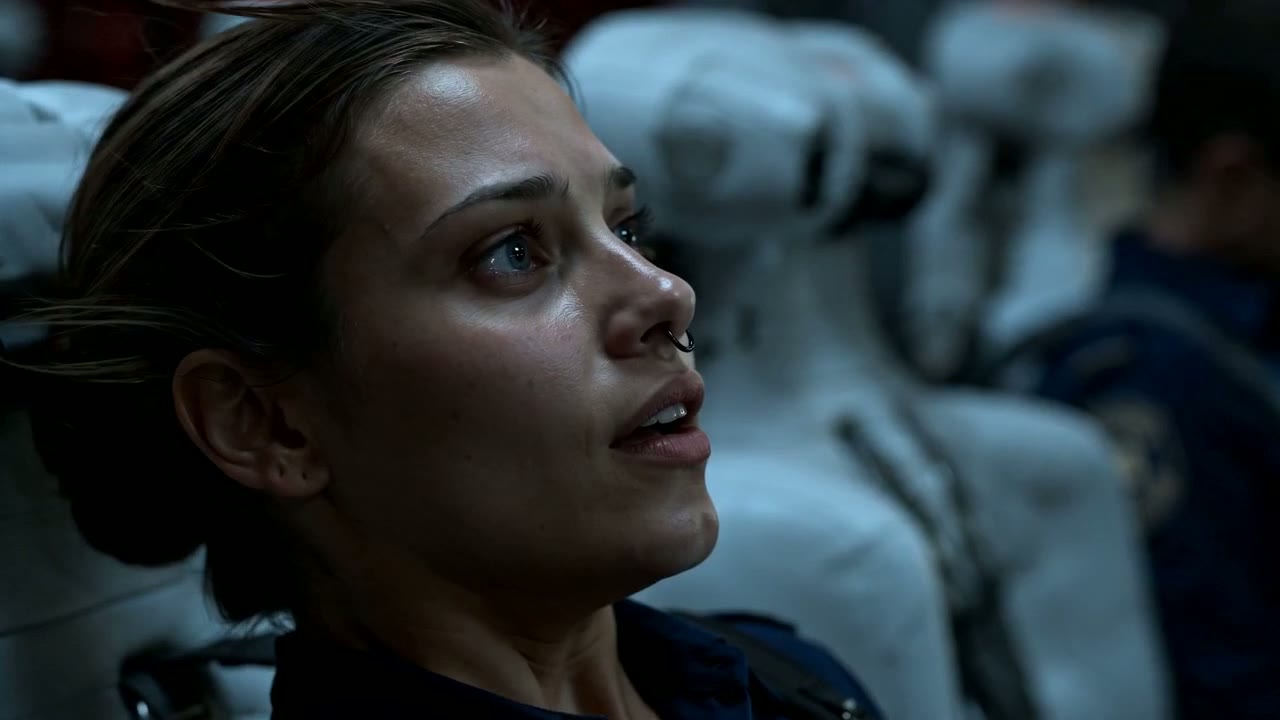
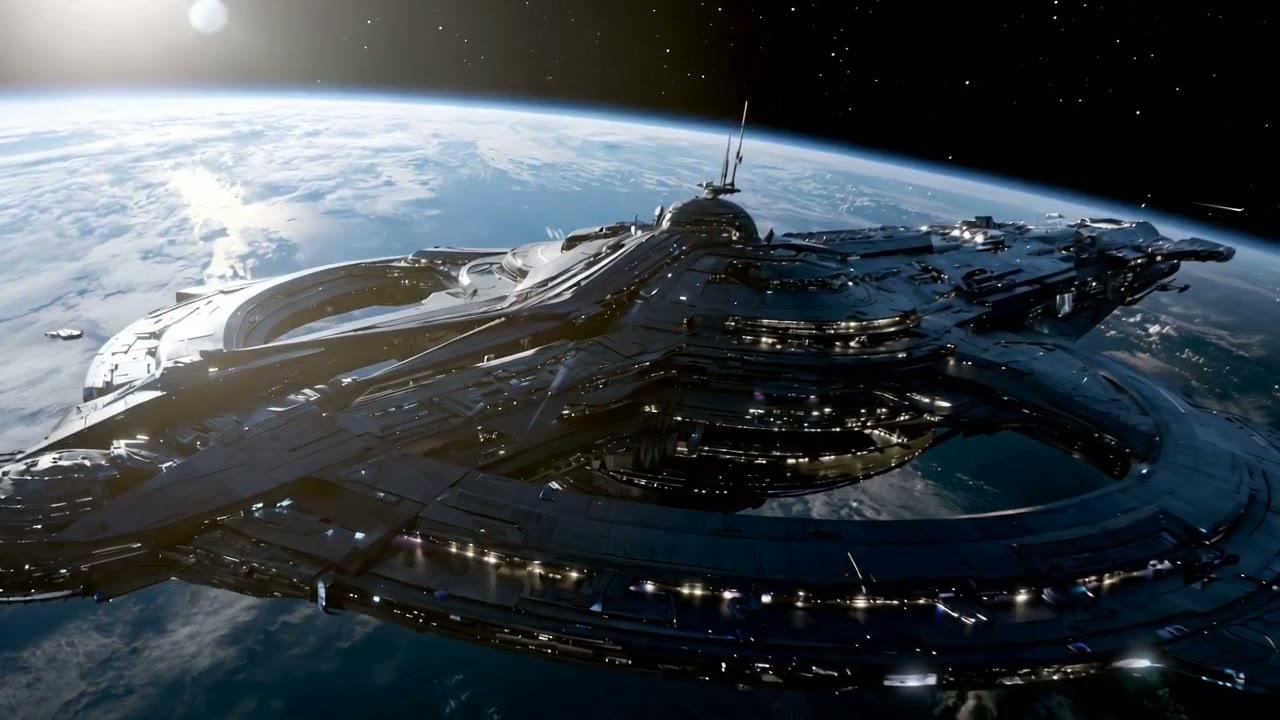
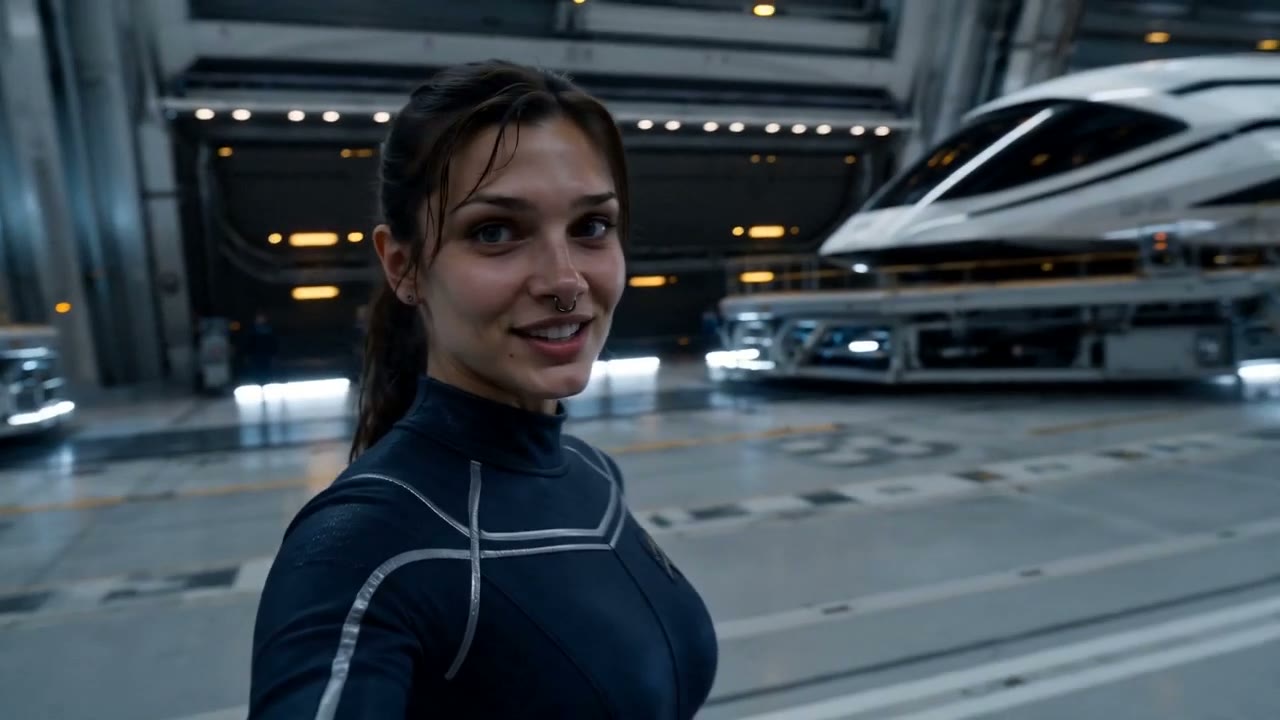
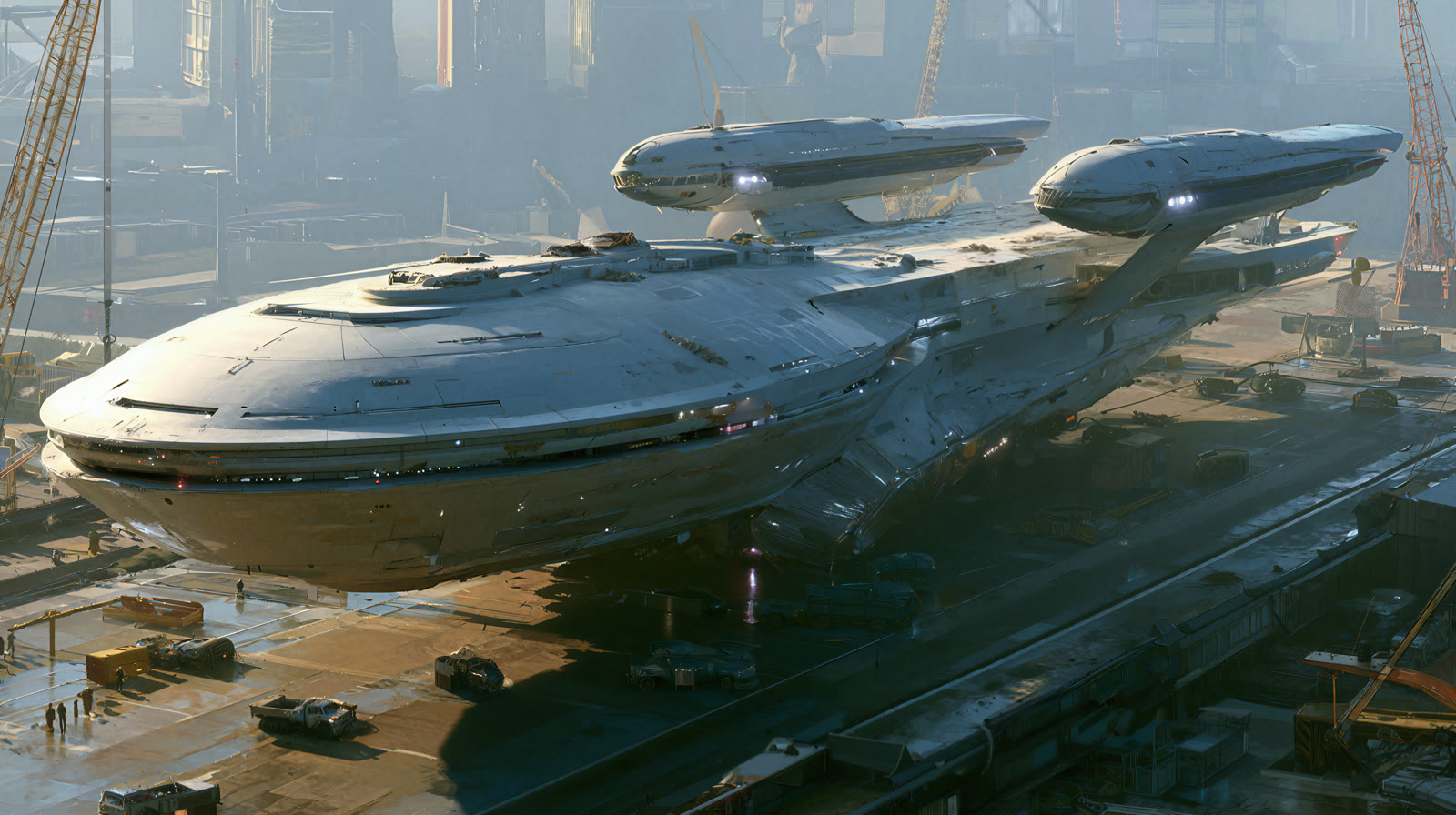
There is no set. No camera, no cast, no crew calls. Every frame of Longwave is written before it exists — as a prompt. These are the working files: the references, the prompts, the failed takes, and the notes that fixed them.
Here's the shape of each. The finished episodes stay on the Watch pages — this is where the work shows its seams.
01 · The Method
The full production method
How an episode gets made, stage by stage — the craft decisions behind every step, from locked character sheets to the final 4× upscale.
02 · The Shot Files
Four shots declassified, a fifth sealed
One file per featured shot: every reference picture and its prompt, the final prompt annotated, the raw takes — including the failures — and the director's notes.
Verbatim and copyable — the paragraphs that built the cast, the sets, the props. Operator clearance — the top membership tier.
01 · The Method
How an episode gets made
Eight stages between a blank page and a finished transmission — in order. The same method, every episode.
01
The character sheets
Before anything: locked character sheets. One page per character that never changes — face, age, build, how they talk, what they never say, the details that never come off (Elena's wedding ring). Every prompt is checked against them, so the same person walks out of every shot.
02
The script
AI assistant (Claude)
The scripts are drafted with an AI writing assistant (Claude) — working to my brief, against my story. Every scene, every line, every choice is mine to keep or kill.
The writing obeys the machine's limits. Dialogue must land inside a 10–15 second clip — no overlapping speakers, no word-doubling; a line gets its energy from content and body language, not volume. Establishing shots have to do narrative work. Scenes end on a held beat, never on the last word.
03
The shot list
Every scene is broken into 10- and 15-second shots before any prompt is written — a one-line plan per shot: what happens, who's in it, which pictures it needs. The shortest viable duration wins; a 12-second beat becomes one 15-second shot, never two.
04
The prompts
Each plan becomes a full written prompt: the subject first, then what happens second by second, then camera, style, lighting, sound. One physical action per timed beat, with a clock on it. Hard ceiling: 3,500 characters — if a shot doesn't fit, the shot gets restructured, not the limit tested. The full anatomy is public — one real prompt, annotated, on the free page.
05
The reference pictures
MidjourneyChatGPT
The pictures come before the video. The video model doesn't know Olivia's face or the ship, so every shot loads reference pictures that lock them. The routing rule: Midjourney for what should feel stylized — the sci-fi sets and props; ChatGPT for what should feel real — faces, Earth, everyday objects.
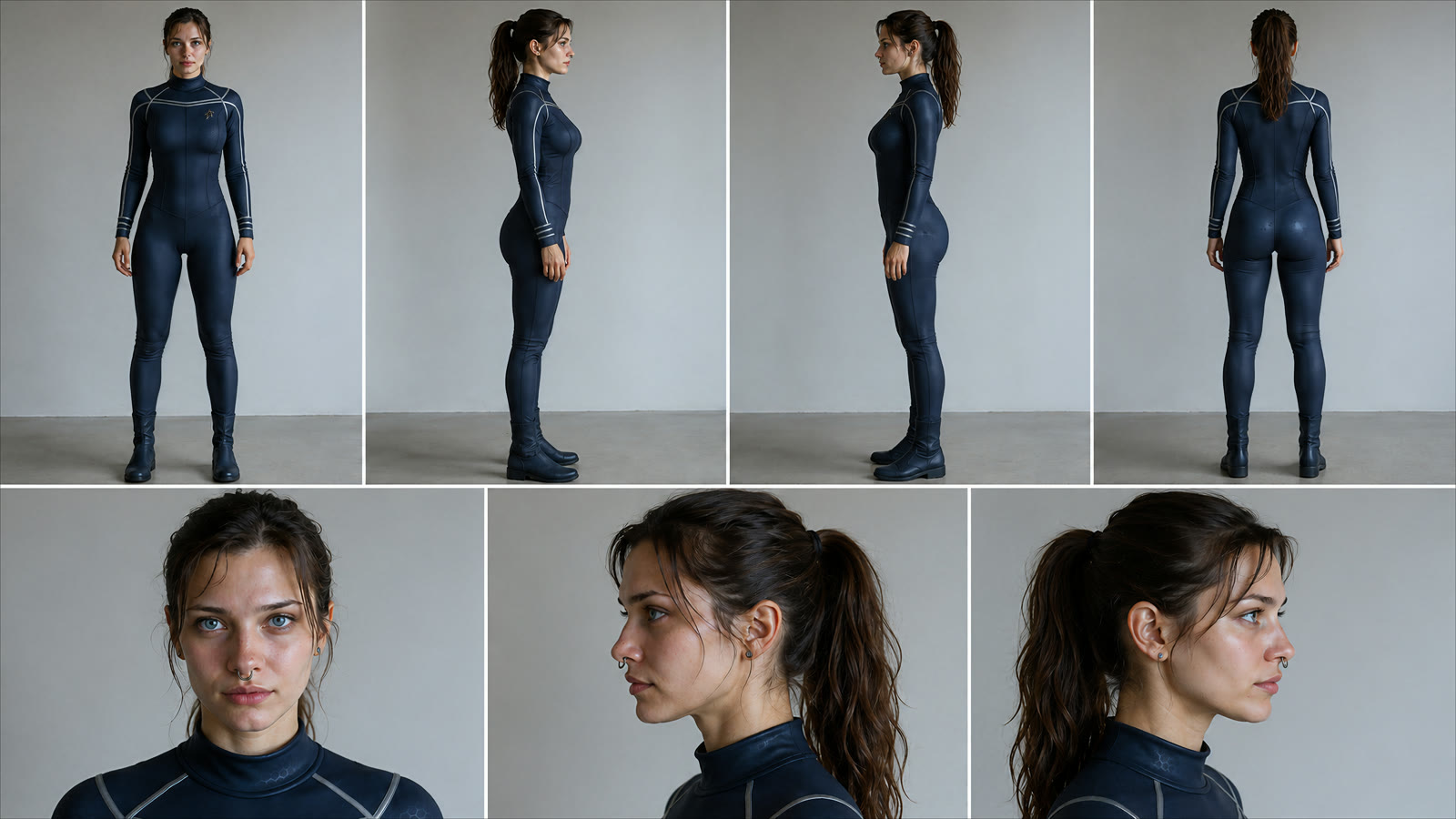
One mugshot per character becomes an identity sheet — four poses, three portraits, marked IDENTITY ONLY. Outfit and hair live in the scene's pictures, never in the prompt text: two sources of truth drift. Redos are additive — the old picture is kept, the new one generated, the better one wins.
06
Generation
Runway · Seedance 2.0
Pictures plus prompt go into Runway, running the Seedance 2.0 model — out comes a 10- or 15-second video, with sound. Shots are generated in batches, several takes each. Takes vary the camera and the behavior, never the lighting or the wardrobe, so any take can replace any other in the edit. And a question never splits across two clips: the model can't hold blocking across a cut, so the answer stays in the same take.
07
The edit + revisions
Premiere Pro
The rough cut is assembled in Premiere — and the cut talks back. Every shot that fails gets a typed direction: REPLACE, PICKUP, INSERT or OMIT. Every revised shot ships with an extreme-close-up companion prompt of the same beat — manufactured coverage, since there is no set to go back to. Each close-up restates posture, eye-lines and distances in full, because the model can't see the other clip.
08
Sound & finish
ElevenLabsTopaz
Audio inside the video prompts stays deliberately minimal — dialogue and room tone, no music. The score is a post pass at picture lock: underscore first, scene by scene, then sound effects as a separate layer, built in ElevenLabs. Then every clip goes through Topaz Video AI and comes out upscaled 4×.
02 · The Shot Files
One file per shot
Opened after its transmission airs: the brief, the references, the final prompt verbatim, the raw takes — including the ones that failed — and the notes that fixed them.
EP_003 · Frame 19 — declassifies when the transmission airs.
03 · The Prompt Vault Operator clearance
Every reference starts as a paragraph
27 prompts on file, exactly as they were sent to the machine — copyable, growing with every episode. The images and titles below are open to every member; the prompt text itself is Operator clearance.
Operator clearance
You're crew, so the whole collection is yours to browse — every image, every title. The paragraphs themselves ship with the Operator seat: all 27, verbatim, one copy button each. View Operator →
The Ballard kitchen
ChatGPTEP_001Environment
Ref prompt · ENV-BALLARD-KITCHEN
Generate 4 different photographic variations of the following scene description, returned as 4 separate images in a single response. Vary the camera angle, framing, and composition between variations, but keep the lighting register, color palette, and core subject consistent across all 4.
Early-twentieth-century craftsman house kitchen with subtle 2198 retrofits — paper-thin wall display where old TV used to mount (showing weather), smart-glass overlay on wood-frame window, small floor-cleaning robot in BG watering plants, wood cabinets, morning Pacific Northwest light angling low and golden through the window with Seattle skyline + sea-wall element visible in distance, lived-in domestic Children of Men aesthetic.
Create a **photorealistic multi-angle photographic identity sheet** of the person whose face appears in the uploaded reference image.
**IMPORTANT — what the reference image is for, and what to IGNORE in it:**
- USE the reference image only for the person's IDENTITY: facial structure, facial proportions, skin texture, skin tone, age, eye color, asymmetry, natural imperfections, and any locked facial features (e.g. piercings, scars, beard pattern) that the augmentation block below explicitly preserves.
- DO NOT replicate from the reference image: the outfit, clothing, jewelry, accessories, hairstyle, background, lighting register, or photographic style. These come from the augmentation block below — that block OVERRIDES anything visible in the reference image. The outfit and hairstyle visible in the reference image are NOT part of the character's wardrobe; treat them as irrelevant.
- Match the **exact facial real-world appearance** of the person: facial structure, proportions, skin texture, age, asymmetry, and natural imperfections.
- The result must look like **real photography of a real human**, not a digital character or 3D asset.
- Use a **simple, neutral background**, similar to a studio or indoor wall.
- The overall feeling should be **documentary and natural**, not stylized or cinematic.
**Layout**
- **Two horizontal rows**, presented as a clean photo contact sheet.
- **Top row:** four full-body photographs of the same person:
1. Facing the camera
2. Left-facing profile
3. Right-facing profile
4. Facing away from the camera
- **Bottom row:** three close-up photographic portraits:
1. Facing the camera
2. Left-facing profile
3. Right-facing profile
**Pose & Body Language**
- The subject stands **naturally and casually**, as a real person would when asked to stand still.
- No exaggerated stance, no rigid pose, no symmetry.
- Subtle, natural weight distribution and relaxed posture.
- Shoulders relaxed, arms resting naturally at the sides.
**Consistency & Accuracy**
- Maintain **strong identity consistency** across all images.
- Preserve natural human asymmetry.
- Proportions must remain realistic and consistent without looking mechanically aligned.
- The subject should feel like the *same person photographed multiple times*, not a replicated model.
**Lighting & Camera**
- Soft, neutral, real-world lighting (similar to window light or soft studio light).
- No dramatic, cinematic, or stylized lighting.
- Natural shadows with gentle falloff.
- Realistic camera perspective and lens behavior.
**Critical constraints**
- Not a 3D render
- Not CGI
- Not a game character
- Not stylized
- Not a model turnaround
---
SUBJECT DETAILS (locked from canon profile):
- 22, slim frame with feminine curves, olive-toned skin, auburn hair, blue eyes, septum ring
OUTFIT (scene-specific):
- soft sweater, jeans (early-morning casual at Ballard kitchen, 2098)
HAIRSTYLE (scene-specific):
- auburn loose
CONTEXT (scene-specific):
- intimate domestic morning register
PRESENTATION (locked for Olivia):
- Olivia is shown wearing clothes that fit her well and naturally flatter her figure. Keep the look grounded and realistic — not exaggerated, not over-stylized, not pin-up. Even in scenes implying physical hardship (mud, exhaustion, weather), her clothing and styling stay composed and naturally attractive without becoming a distraction from the scene.
OUTPUT QUALITY:
- Render at 4K resolution.
Create a **photorealistic multi-angle photographic identity sheet** of the person whose face appears in the uploaded reference image.
**IMPORTANT — what the reference image is for, and what to IGNORE in it:**
- USE the reference image only for the person's IDENTITY: facial structure, facial proportions, skin texture, skin tone, age, eye color, asymmetry, natural imperfections, and any locked facial features (e.g. piercings, scars, beard pattern) that the augmentation block below explicitly preserves.
- DO NOT replicate from the reference image: the outfit, clothing, jewelry, accessories, hairstyle, background, lighting register, or photographic style. These come from the augmentation block below — that block OVERRIDES anything visible in the reference image. The outfit and hairstyle visible in the reference image are NOT part of the character's wardrobe; treat them as irrelevant.
- Match the **exact facial real-world appearance** of the person: facial structure, proportions, skin texture, age, asymmetry, and natural imperfections.
- The result must look like **real photography of a real human**, not a digital character or 3D asset.
- Use a **simple, neutral background**, similar to a studio or indoor wall.
- The overall feeling should be **documentary and natural**, not stylized or cinematic.
**Layout**
- **Two horizontal rows**, presented as a clean photo contact sheet.
- **Top row:** four full-body photographs of the same person:
1. Facing the camera
2. Left-facing profile
3. Right-facing profile
4. Facing away from the camera
- **Bottom row:** three close-up photographic portraits:
1. Facing the camera
2. Left-facing profile
3. Right-facing profile
**Pose & Body Language**
- The subject stands **naturally and casually**, as a real person would when asked to stand still.
- No exaggerated stance, no rigid pose, no symmetry.
- Subtle, natural weight distribution and relaxed posture.
- Shoulders relaxed, arms resting naturally at the sides.
**Consistency & Accuracy**
- Maintain **strong identity consistency** across all images.
- Preserve natural human asymmetry.
- Proportions must remain realistic and consistent without looking mechanically aligned.
- The subject should feel like the *same person photographed multiple times*, not a replicated model.
**Lighting & Camera**
- Soft, neutral, real-world lighting (similar to window light or soft studio light).
- No dramatic, cinematic, or stylized lighting.
- Natural shadows with gentle falloff.
- Realistic camera perspective and lens behavior.
**Critical constraints**
- Not a 3D render
- Not CGI
- Not a game character
- Not stylized
- Not a model turnaround
---
SUBJECT DETAILS (locked from canon profile):
- 52, ~1.78m (taller than Olivia in two-shot), lean, pale weathered Pacific Northwest skin, gray hair threaded with dark brown, clear blue eyes (Locke family), high cheekbones, steady mouth
OUTFIT (scene-specific):
- dark wool trousers, button-down shirt, optional 15-year-old cardigan; thin gold wedding band on ring finger (LOCKED — never removed)
HAIRSTYLE (scene-specific):
- gray short practical, slightly imperfect crop (cuts it herself)
CONTEXT (scene-specific):
- quiet undemonstrative register; intimate domestic; same outfit register across morning kitchen + going-away party + porch farewell
OUTPUT QUALITY:
- Render at 4K resolution.
Generate 4 different photographic variations of the following scene description, returned as 4 separate images in a single response. Vary the camera angle, framing, and composition between variations, but keep the lighting register, color palette, and core subject consistent across all 4.
Pacific Northwest residential backyard with going-away party context — modern LED-flame string lights overhead, wood fence with autonomous taxi visible at curb through gap, neighbor's atmospheric collector visible on roof beyond fence, wooden porch with descending steps, twenty-some guests in clusters with drinks and small plates, atmospheric warm intimate Children of Men aesthetic with subtle 2198 cues. Time-of-day (golden hour → dusk → late dusk) directed per Seedance prompt.
Create a **photorealistic multi-angle photographic identity sheet** of the person whose face appears in the uploaded reference image.
**IMPORTANT — what the reference image is for, and what to IGNORE in it:**
- USE the reference image only for the person's IDENTITY: facial structure, facial proportions, skin texture, skin tone, age, eye color, asymmetry, natural imperfections, and any locked facial features (e.g. piercings, scars, beard pattern) that the augmentation block below explicitly preserves.
- DO NOT replicate from the reference image: the outfit, clothing, jewelry, accessories, hairstyle, background, lighting register, or photographic style. These come from the augmentation block below — that block OVERRIDES anything visible in the reference image. The outfit and hairstyle visible in the reference image are NOT part of the character's wardrobe; treat them as irrelevant.
- Match the **exact facial real-world appearance** of the person: facial structure, proportions, skin texture, age, asymmetry, and natural imperfections.
- The result must look like **real photography of a real human**, not a digital character or 3D asset.
- Use a **simple, neutral background**, similar to a studio or indoor wall.
- The overall feeling should be **documentary and natural**, not stylized or cinematic.
**Layout**
- **Two horizontal rows**, presented as a clean photo contact sheet.
- **Top row:** four full-body photographs of the same person:
1. Facing the camera
2. Left-facing profile
3. Right-facing profile
4. Facing away from the camera
- **Bottom row:** three close-up photographic portraits:
1. Facing the camera
2. Left-facing profile
3. Right-facing profile
**Pose & Body Language**
- The subject stands **naturally and casually**, as a real person would when asked to stand still.
- No exaggerated stance, no rigid pose, no symmetry.
- Subtle, natural weight distribution and relaxed posture.
- Shoulders relaxed, arms resting naturally at the sides.
**Consistency & Accuracy**
- Maintain **strong identity consistency** across all images.
- Preserve natural human asymmetry.
- Proportions must remain realistic and consistent without looking mechanically aligned.
- The subject should feel like the *same person photographed multiple times*, not a replicated model.
**Lighting & Camera**
- Soft, neutral, real-world lighting (similar to window light or soft studio light).
- No dramatic, cinematic, or stylized lighting.
- Natural shadows with gentle falloff.
- Realistic camera perspective and lens behavior.
**Critical constraints**
- Not a 3D render
- Not CGI
- Not a game character
- Not stylized
- Not a model turnaround
---
SUBJECT DETAILS (locked from canon profile):
- same as above
OUTFIT (scene-specific):
- casual party clothes — soft layered tops, jeans (NOT cadet uniform yet); going-away party register
HAIRSTYLE (scene-specific):
- auburn loose, golden-hour catch
CONTEXT (scene-specific):
- vlog-mode performed-warm energy
PRESENTATION (locked for Olivia):
- Olivia is shown wearing clothes that fit her well and naturally flatter her figure. Keep the look grounded and realistic — not exaggerated, not over-stylized, not pin-up. Even in scenes implying physical hardship (mud, exhaustion, weather), her clothing and styling stay composed and naturally attractive without becoming a distraction from the scene.
OUTPUT QUALITY:
- Render at 4K resolution.
Create a **photorealistic multi-angle photographic identity sheet** of the person whose face appears in the uploaded reference image.
**IMPORTANT — what the reference image is for, and what to IGNORE in it:**
- USE the reference image only for the person's IDENTITY: facial structure, facial proportions, skin texture, skin tone, age, eye color, asymmetry, natural imperfections, and any locked facial features (e.g. piercings, scars, beard pattern) that the augmentation block below explicitly preserves.
- DO NOT replicate from the reference image: the outfit, clothing, jewelry, accessories, hairstyle, background, lighting register, or photographic style. These come from the augmentation block below — that block OVERRIDES anything visible in the reference image. The outfit and hairstyle visible in the reference image are NOT part of the character's wardrobe; treat them as irrelevant.
- Match the **exact facial real-world appearance** of the person: facial structure, proportions, skin texture, age, asymmetry, and natural imperfections.
- The result must look like **real photography of a real human**, not a digital character or 3D asset.
- Use a **simple, neutral background**, similar to a studio or indoor wall.
- The overall feeling should be **documentary and natural**, not stylized or cinematic.
**Layout**
- **Two horizontal rows**, presented as a clean photo contact sheet.
- **Top row:** four full-body photographs of the same person:
1. Facing the camera
2. Left-facing profile
3. Right-facing profile
4. Facing away from the camera
- **Bottom row:** three close-up photographic portraits:
1. Facing the camera
2. Left-facing profile
3. Right-facing profile
**Pose & Body Language**
- The subject stands **naturally and casually**, as a real person would when asked to stand still.
- No exaggerated stance, no rigid pose, no symmetry.
- Subtle, natural weight distribution and relaxed posture.
- Shoulders relaxed, arms resting naturally at the sides.
**Consistency & Accuracy**
- Maintain **strong identity consistency** across all images.
- Preserve natural human asymmetry.
- Proportions must remain realistic and consistent without looking mechanically aligned.
- The subject should feel like the *same person photographed multiple times*, not a replicated model.
**Lighting & Camera**
- Soft, neutral, real-world lighting (similar to window light or soft studio light).
- No dramatic, cinematic, or stylized lighting.
- Natural shadows with gentle falloff.
- Realistic camera perspective and lens behavior.
**Critical constraints**
- Not a 3D render
- Not CGI
- Not a game character
- Not stylized
- Not a model turnaround
---
SUBJECT DETAILS (locked from canon profile):
- ~22, tall, lean (broader at shoulders), warm mid-tone Latin American skin (per surname Reyes), dark brown hair short and modern, dark brown eyes, open easy face
OUTFIT (scene-specific):
- travel clothes slightly rumpled — nicer top thrown on for the party but jeans, untidy from trip
HAIRSTYLE (scene-specific):
- dark brown short, slightly messy from travel
CONTEXT (scene-specific):
- warm easy register; calm-after-the-storm presence for Olivia
OUTPUT QUALITY:
- Render at 4K resolution.
The front porch of an early-twentieth-century Seattle Ballard craftsman house, photographed in mid-morning Pacific Northwest light. The porch is wide enough for two people to stand abreast, with a wooden rail painted a soft slate-grey, four square wooden columns supporting the porch roof, broad wooden steps descending five risers to a stone path that leads to the street. The porch floor is painted matte slate-grey wood, weathered evenly. A small wooden bench against the side wall, a single terracotta pot of late-summer herbs (rosemary, thyme) beside the front door. The front door is wood-framed with a brass handle and a frosted-glass inset panel — visible warmth from the interior behind it. The house siding around the porch is white-painted horizontal lap siding with charcoal trim, a small mid-pitched gable above the porch overhang. Two craftsman-style hanging porch lights flanking the door, brass with frosted glass — off.
Mid-morning Pacific Northwest light: soft golden warm light angles in from the left across the porch floor, the kind of light that follows a marine layer's dispersal. The leaves of a maple at the edge of the frame catch the warmth. A small marine breeze has pulled the front edge of the porch curtain slightly. The sky above the porch is pale soft-grey-blue, not a hard sun.
In the middle distance beyond the porch railing: the slow downward slope of the front yard onto the residential Ballard street, the curb visible, modest mature trees lining the sidewalk, a low concrete sea-wall element visible far in the middle distance on the Seattle skyline beyond. Subtle 2098 retrofit cues in BG only: a small atmospheric water collector on a neighbor's roof, a discreet smart-glass overlay on one of the front windows (visible only as a faint shimmer at the edge of frame). Nothing futuristic dominant — the porch must read as the family's lived inheritance, not as 2098 chrome.
Empty porch, no people, no vehicles in this plate. Photorealistic cinematic register, lived-in domestic warmth, soft-natural-light tonality, fine wooden grain visible at close-frame distance. Children-of-Men aesthetic — present-day-with-quiet-cues. --ar 16:9 --style raw
A single colossal starship parked on a vast dry desert plain, clear bold silhouette: a wide rounded primary hull at the front and three massive engine nacelles on swept-back pylons at the rear, the ship as large as a city, tiny trucks and human figures at its base for scale, cracked dry earth stretching to the horizon, flat overcast daylight, photoreal hard sci-fi, wide establishing shot --ar 16:9 --style raw --no water, ocean, sea, aircraft carrier, harbor, rocket, space shuttle, NASA orbiter
Generate 4 different photographic variations of the following scene description, returned as 4 separate images in a single response. Vary the camera angle, framing, and composition between variations, but keep the lighting register, color palette, and core subject consistent across all 4.
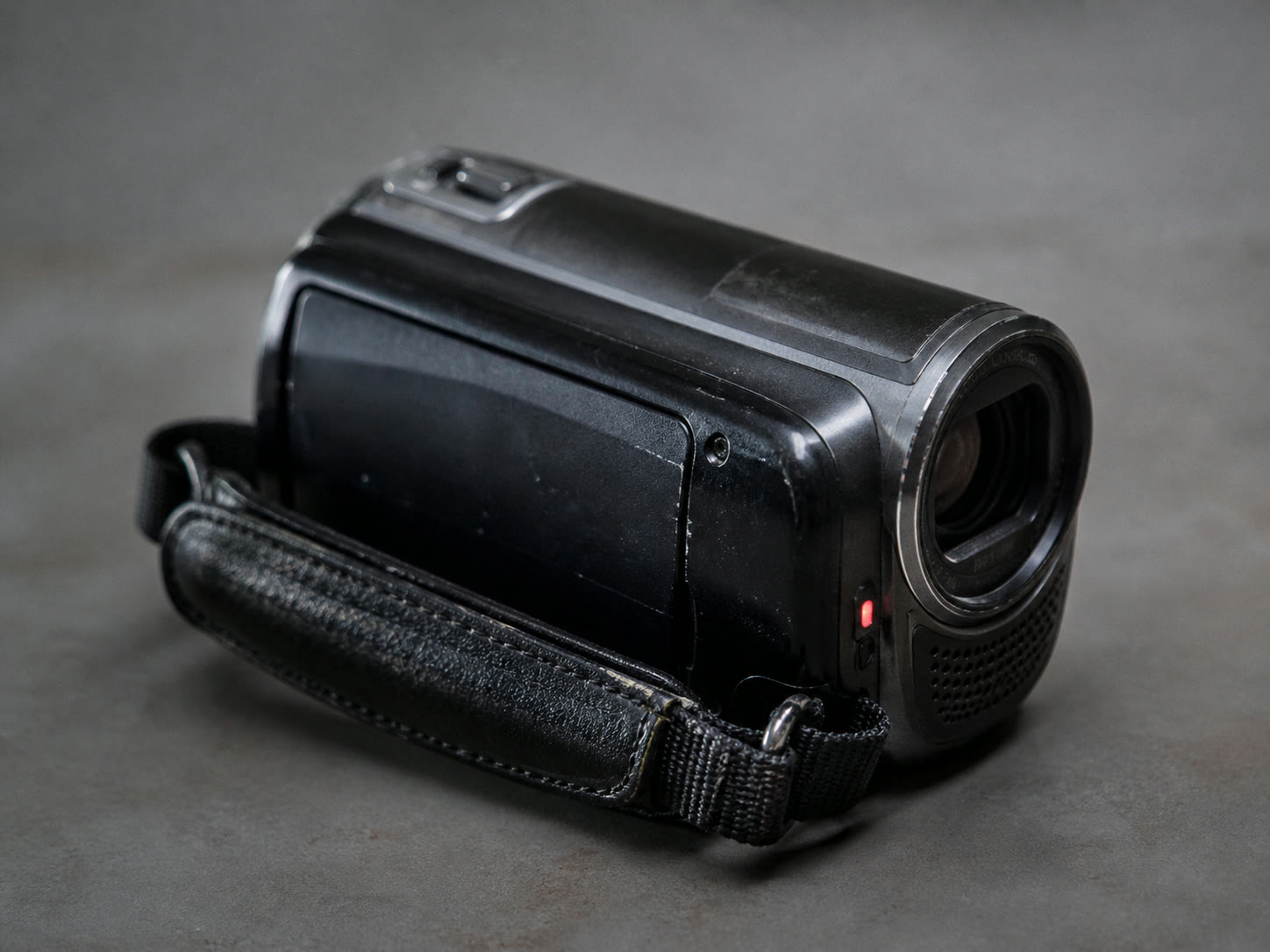
Small old-fashioned hand-held video camera, 2010s consumer model, leather strap, worn black plastic body, small red record LED. Daniel's old camera that Olivia uses for vlogs. Wide-angle vlog selfie POV grammar / lens distortion is Seedance prompt direction, NOT a separate ref.
[Reference image attached] = ENV-PATHFINDER-BRIDGE active variant — the working Pathfinder bridge with crew at consoles, soft warm-white overheads, viewscreens lit with star-field navigation data.
[Relationship instruction] Using this attached image as the strict architectural reference for the bridge — preserve the two-tier command stations, the broad central walkway, the viewscreens at the front wall, the control consoles at each station, and the camera framing — transform it into the same room in a post-event abandoned state.
[New scenario] No crew, no power, no movement. Viewscreens at the front cracked and dead, no light coming from them. Consoles dark with dust. Debris on the deck — fallen panels, scattered tools. Cold blue-green emergency lighting only, single overhead strip flickering irregularly. Monumental empty scale, atmospheric Alien aesthetic, photoreal cinematic sci-fi register.
Generate 4 different photographic variations of the following scene description, returned as 4 separate images in a single response. Vary the camera angle, framing, and composition between variations, but keep the lighting register, color palette, and core subject consistent across all 4.
Spaceship mess hall tables overturned, scattered trays, half-eaten meals, single coffee mug on its side with dried brown ring, mid-meal evacuation evidence, photoreal real-world objects (architectural sci-fi context supplied by ENV-ATRIUM-DAMAGED).
Generate 4 different photographic variations of the following scene description, returned as 4 separate images in a single response. Vary the camera angle, framing, and composition between variations, but keep the lighting register, color palette, and core subject consistent across all 4.
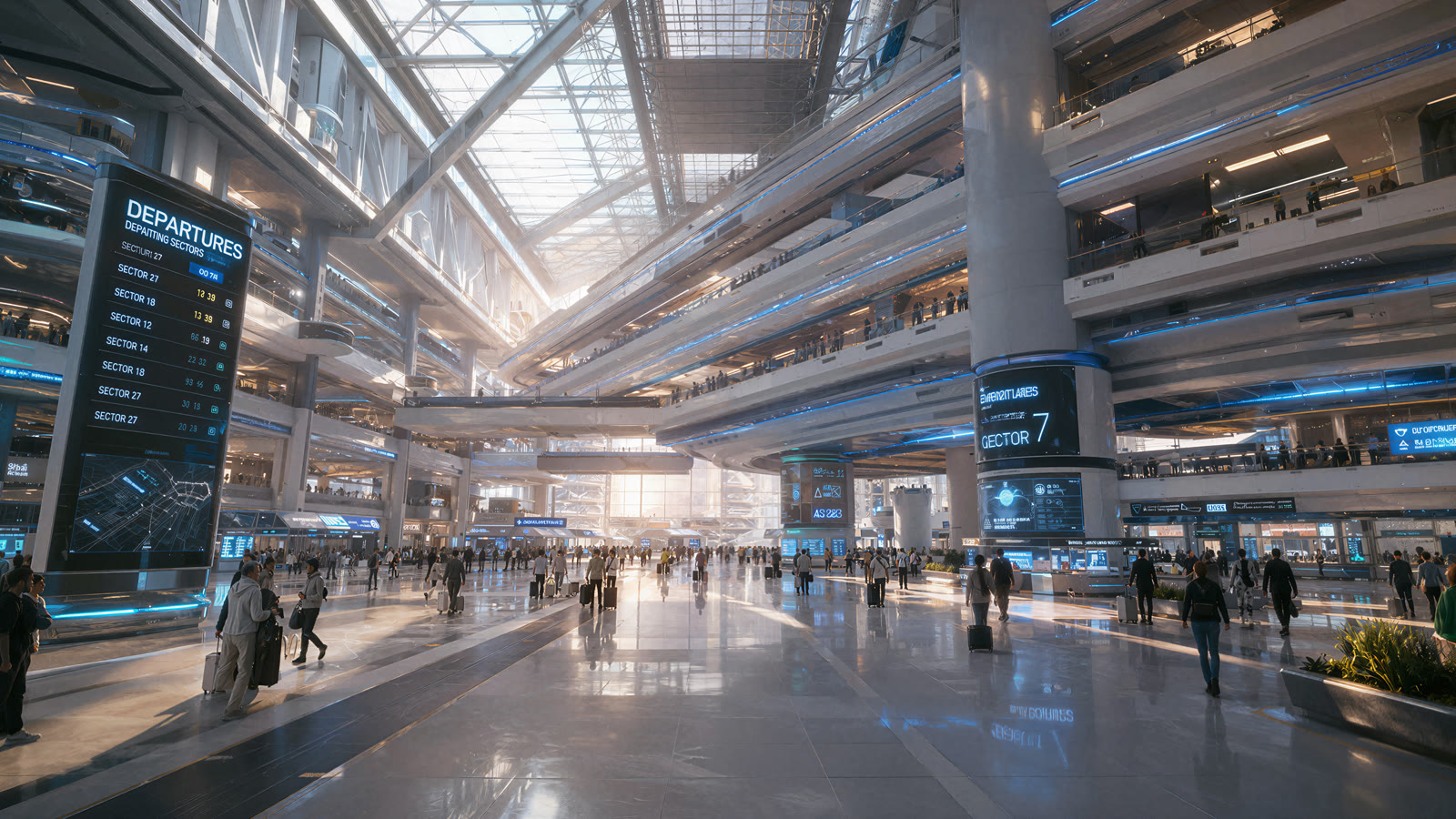
Futuristic spaceport infrastructure at sunrise — gargantuan starship dominates the frame, so large it stretches into the horizon with no visible end, massive hull extending beyond frame edges, ground-level perspective emphasizing overwhelming scale, multiple gantries and service vehicles dwarfed by ship's immensity, low haze, near-future 2198, ground-level photoreal grounded register, atmospheric (Children of Men / Minority Report tonal), starship design inspired by Star Trek aesthetic but not Starfleet vessel, utilitarian deep-space exploration architecture, visible hull plating and structural detail, sense of industrial grandeur.
[Reference image attached] = ENV-BOARDING-TERMINAL — the boarding-line / scan-arch portion of a near-future 2098 spaceport terminal, warm interior overheads + cool blue accent from scan arches, holographic floating typography, Minority Report grounded near-future register.
[Relationship instruction] Using this attached image as the strict architectural and material reference — preserve the same era, the same lighting palette (warm overheads + cool blue accents + sunrise spilling through glass), the same holographic-floating-typography signage language, the same material register (clean white-and-steel surfaces, integrated identity-scan arches, atmospheric ambient haze) — transform the framing into the MAIN ATRIUM of the same terminal building rather than the queue area.
[New scenario] A monumental departure atrium — vaulted glass-and-steel ceiling at five or six stories, broad open concourse floor at ground level, multiple mezzanine levels visible above with departure activity throughout, large structural columns rising the full height, atmospheric layered haze giving the upper levels soft fall-off. Sunrise warm-gold light pouring in through the vaulted glass and catching the columns and mezzanine edges. Distant holographic departure boards drift in floating typography at multiple scales throughout the space. The space reads as the size of a major airport terminal but scaled up for interstellar departure — small clusters of figures at ground level for scale reference (no central focus on any figure). No central character in the ref — this is an environment plate that will host different action per Seedance shot.
[Composition] Wide establishing shot, slight low-angle to emphasize the vaulted scale, eye-level toward the upper structure, deep depth of field, the empty concourse floor and the vaulted ceiling both reading at scale.
[Style] Photorealistic cinematic, Minority Report grounded near-future visual DNA, Interstellar / Sunshine awe-scale register, atmospheric layered haze, sunrise warm-gold dominant key with cool blue accents from integrated signage, monumental institutional-public architecture, no flashy futurism, no dystopian noir.
[Subject] A monumental holographic public-information display dominating one wall of a spaceport departure atrium — multi-story tall, soft floating cinematic typography in the air rather than fixed to a screen surface, with slow heroic imagery cycling behind the typography. Patriotic-military recruitment register, NASA / Apollo-era earnest patriotism crossed with Minority Report holographic-display visual DNA.
[Action] The display is still and operational — typography drifts at slightly different speeds in the air; the imagery behind it transitions slowly in a sustained slow cycle. No flicker, no glitch, no abrupt cuts in the cycling imagery. Three slogans visible together at different scales, drifting subtly in mid-air:
- Largest at the top: "PATHFINDER · FOR EARTH · FOR TOMORROW"
- Mid-scale below: "ONE GENERATION TO CHANGE EVERYTHING"
- Smaller at the lower edge: "GO. SO THAT HUMANITY CAN."
Behind the typography, slow cycling imagery: the Pathfinder ship silhouetted against a rising sun → Earth from low orbit in atmospheric layered blue-and-white → a slow gallery of cadet faces in heroic three-quarter institutional-recruitment register (none of them resembling any specific character, institutional stock) → an artist-concept landscape of a sister-Earth world with two suns low on the horizon, alien-but-habitable terrain.
[Location/context] One wall of the monumental departure atrium inside a near-future 2098 spaceport on Earth. The display is built into the upper architecture, sunrise warm-gold light pouring around its edges from the vaulted glass overhead, atmospheric layered haze softening the surrounding architecture. Visually consistent with the boarding-terminal era cues (holographic floating typography, integrated identity-scan arches elsewhere in the building).
[Composition] Low-angle wide looking up, the display filling the upper two thirds of the frame, vaulted atrium architecture framing it on either side, scale-reference figures small at the very bottom of the frame at ground level — no central character, no faces clearly readable, just scale-reference clusters of departing passengers.
[Style] Photorealistic cinematic, Minority Report grounded-near-future holographic-display visual DNA crossed with NASA / Apollo-era earnest patriotic recruitment register — overtly patriotic-military but earnest, NOT satirical and NOT dystopian. Interstellar / Sunshine awe-scale register on the surrounding architecture. The typography reads cleanly, no warping, no distorted lettering. The recruitment imagery is idealized institutional but photoreal. Cool blue accent from elsewhere in the atrium at frame edge. The slogans MUST be readable as exact text. No music cue baked into the ref.
[Reference image attached] = the Pathfinder launch couch bay interior (the SAME bay shown in the attached image).
[Relationship instruction] Using the attached image as the strict style reference, keep the EXACT couch design, materials, colors, surface detailing, cabin geometry register and lighting. LAYOUT ONLY: change nothing about the look or finish of the bay; change ONLY the spatial arrangement of the couches.
[New spatial layout]
- Arrange the launch couches in rows of THREE across, with multiple rows receding into the distance away from camera — a deep bay, NOT a single row.
- A clear front row of three couches faces forward toward camera; successive rows of three recede behind it into soft depth.
- Same five-point harnesses on every couch; same cabin red ready-light ambient; same structural cabin geometry and restrained practical lighting as the attached plate.
- Empty plate — no people, no helmets in racks, no readable text or UI.
[Composition] Eye-level wide looking down the bay so the front row of three reads clearly and the rows behind recede into depth; 35mm, photoreal.
[Style] Photorealistic cinematic sci-fi, sleek high-tech Star Trek register (advanced, lived-in, photoreal), restrained practical lighting — identical in style and finish to the attached reference; suitable for use as a Seedance Omni Reference.
Earth as seen from low-orbit insertion through a near-future 2098 starship bay viewport, the horizon already curving, cloud cover receding under, upper edge of the visible Earth darkening as the atmosphere thins, deep-space dark just beginning at the top of the frame, photoreal cinematic sci-fi, no readable text or UI, no stylized lens flare, sleek high-tech Star Trek spaceflight realism (advanced, lived-in, photoreal), eye-level looking through a structural viewport with harness webbing softly in the foreground, 35mm --ar 16:9 --style raw
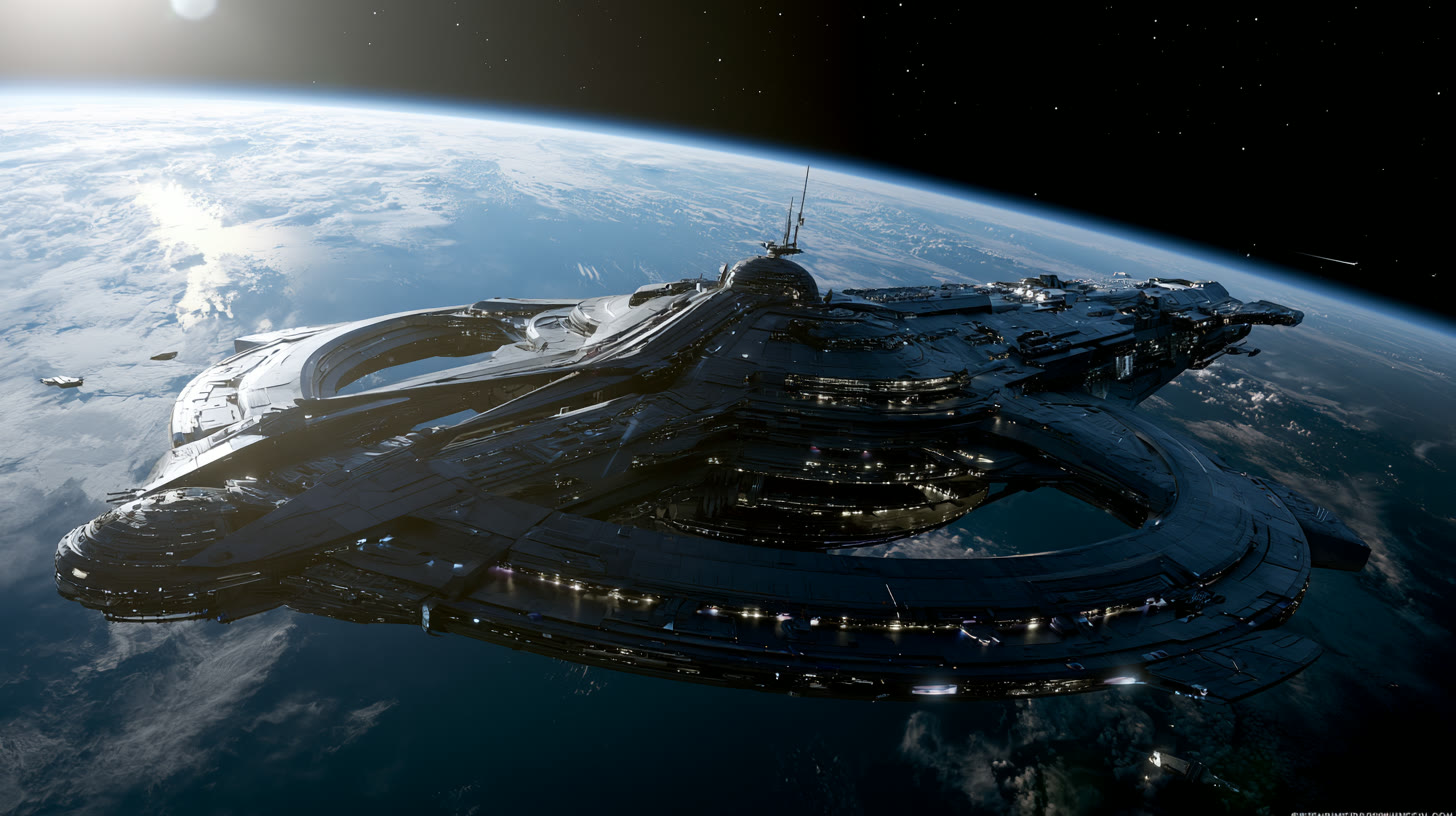
[Reference image attached] = the liaison shuttle hull — a near-future 2098 crew ship (the SAME vessel shown in the attached image; the craft that lifts off from Earth in this episode).
[Relationship instruction] Using the attached image as the strict design reference, reproduce this EXACT ship — same silhouette, same broad streamlined primary hull with the twin raised dorsal pods, same proportions, same surface plating and greebles, same sleek high-tech Star Trek working-ship register (advanced, lived-in, photoreal). IDENTITY ONLY: change nothing about the vessel itself; change ONLY its setting and the lighting.
[New scenario / setting]
- Place the ship clean in low Earth orbit: deep-space black around it, Earth's curved blue limb and a thin bright atmospheric band behind and below it, hard direct sunlight from one side, cool Earth-blue bounce across the shadowed faces.
- No launch pad, no gantries, no ground, no other craft in frame.
- It must read as a single self-contained vessel against space — this is the SMALL liaison shuttle; do NOT turn it into a ring-shaped or city-scale station.
[Composition] Three-quarter exterior hero angle of the whole ship against space, the full silhouette clearly readable; standard lens, cinematic, eye-level-equivalent.
[Style] Photorealistic cinematic sci-fi, sleek high-tech Star Trek register (advanced, lived-in, photoreal), highly futuristic but photoreal and believable (not gaudy), no colored panels, no readable text or logos on the hull; suitable for use as a Seedance Omni Reference.
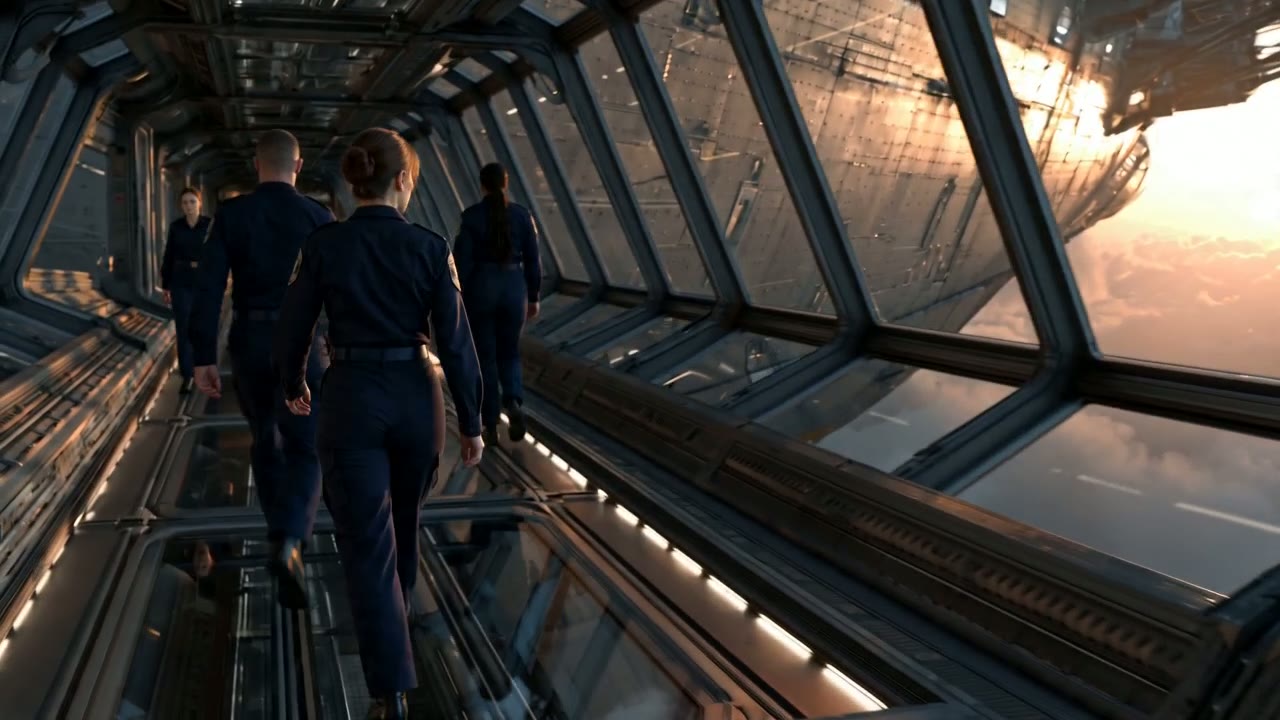
The INTERIOR of a near-future 2098 starship transfer gangway / connecting corridor — the enclosed walkway crew use to cross from a docked shuttle into a larger ship. Clean idealized optimistic-future design (Star-Trek-leaning, sleek light-grey paneling with subtle illuminated seams, soft warm-white practicals), NOT a grimy lived-in Expanse corridor.
- A row of round portholes ("Hublots") runs along one wall, each looking out to deep-space black with a faint cool blue Earth-light and a slice of distant hull beyond the glass.
- One end of the corridor reads as the shuttle hatch / airlock the crew step in from; the walkway runs away from it past the row of windows.
- Floor, handrails and structural ribs read as a sturdy boarding tube; clean, bright, calm.
- Empty plate — no people (figures composited in later), no readable text, logos or UI.
[Composition] Eye-level along the corridor so the walkway leads away from camera and the row of round Hublots reads clearly down one wall; standard lens, cinematic, photoreal.
[Style] Photorealistic cinematic sci-fi, clean idealized 2098 starship architecture, physically plausible lighting, NOT a CGI/game render; suitable for use as a Seedance Omni Reference.
[Reference image attached] = Olivia Locke (mugshot — the locked source of her physical identity).
[Relationship instruction] Using the attached mugshot as the strict facial-identity reference, preserve all locked physical descriptors: slim frame with feminine curves (full bust over slim waist, long-limbed, approximately 1.73m), olive-toned skin, long dark brown hair naturally wavy past the shoulders, clear vibrant blue eyes, small silver hoop septum ring centered on the nose. Generate a multi-angle character identity sheet of her in the wardrobe and context described below. IDENTITY ONLY — environment, props, and held items belong to other canonicals and must not be inserted here.
[New scenario / wardrobe + context]
Create a photorealistic multi-angle photographic identity sheet of the subject in her ship-issue operational uniform. The result must look like real photography of a real human, not a digital character or 3D asset. Use a simple neutral studio backdrop. The overall feeling should be documentary and natural, not stylized or cinematic.
Layout
- Two horizontal rows, presented as a clean photo contact sheet.
- Top row: four full-body photographs of the same person — facing the camera, left-facing profile, right-facing profile, facing away from the camera.
- Bottom row: three close-up photographic portraits — facing the camera, left-facing profile, right-facing profile.
Pose & Body Language
- The subject stands naturally and casually, as a real person would when asked to stand still. No rigid stance, no exaggerated symmetry. Shoulders relaxed, arms resting naturally.
Consistency & Accuracy
- Maintain strong identity consistency across all images.
- Preserve natural human asymmetry; realistic proportions; the subject should feel like the same person photographed multiple times, not a replicated model.
Lighting & Camera
- Soft, neutral, real-world lighting (similar to window light or soft studio light). No dramatic cinematic styling. Natural shadows with gentle falloff. Realistic camera perspective and lens behavior.
Critical constraints
- Not a 3D render. Not CGI. Not a game character. Not stylized. Not a model turnaround.
OUTFIT (scene-specific — Pathfinder operational ship-issue uniform):
- Form-fitted dark navy jumpsuit, full-body single piece. Subtle silver shoulder piping running from the collar over each shoulder. Mock-neck collar, sealed front closure, integrated seam reinforcement at the chest, waist, and elbows. Tailored to the body without being constricting — operational not glamorous. Dark navy operational boots matching the jumpsuit register. PATHFINDER · CADET CORPS shoulder patch on the left deltoid in a clean restrained typeface. No held items. No vlog camera. No duffel. No insignia clutter — just the patch.
- Wardrobe register reads as Star Trek-influenced near-future ship-issue uniform: functional, identical-across-crew, working garment that signals institutional membership.
HAIRSTYLE (per variation):
- v1 (canonical): hair in a smooth working-ponytail at the nape, restraint-friendly for on-duty wear.
- v2: hair fully loose, falling past the shoulders as canonical.
- v3: hair pulled back in a higher working-ponytail with one or two strands escaping at the temple — slightly more lived-in working register.
CONTEXT (scene-specific):
- Neutral studio-grey backdrop. No environment, no other characters, no props. The jumpsuit is the only wardrobe element. Documentary-natural lighting register suitable for use as a Seedance Omni Reference across all on-board scenes for the rest of the series.
[Subject] A near-future 2098 starship cadet-deck logistics counter / quartermaster kit-issue station — counter-front in the foreground, kit-issue shelves and numbered cubby bays in shallow depth behind, a small quartermaster station with a tablet stand. No characters present — empty interior environment plate.
[Action] The counter is set up for active intake operations: a folded uniform kit stack sits ready on the counter top (visible only as compositional weight, not the focal subject), an unobtrusive scanner panel embedded at the counter edge, soft ambient activity register suggested by the lighting alone.
[Location/context] Cadet-deck of the Pathfinder, near-future 2098 deep-space starship interior. Functional, slightly clinical, soft warm-white overheads matching the rest of the cadet-deck corridor and quarters aesthetic. Pale wall panels, restrained signage, working-ship not luxury-ship register.
[Composition] Eye-level wide-establishing of the counter front and the kit-issue shelves behind, slight off-center framing to leave room for a vlog selfie POV to overlay in production. Mid depth of field, the counter sharp in foreground, the shelves and cubby bays in soft focus behind.
[Style] Photorealistic cinematic sci-fi, sleek high-tech Star Trek register (advanced, lived-in, photoreal), near-future 2098 ship-interior aesthetic, soft warm-white overheads with slightly clinical fall, restrained set dressing. Highly futuristic but photoreal and believable (not gaudy). No holographic clutter. No personnel visible. The room reads as a real working space, not a stage set.
A near-future 2098 starship viewport gallery — a long interior hall inside an enormous deep-space vessel with one wall a continuous reinforced-glass viewport onto deep space; beyond the glass, the genuinely dark black of space with sharp distant stars, and Earth small, blue-and-white, and far away (a small bright marble, not dominating the frame — the ship has already pulled away). No people, empty interior environment plate. Working-ship interior: pale structural panels, restrained signage, soft warm-white practical lighting low enough that the view reads through the glass. Composition a wide interior down the gallery with the viewport wall and the small distant Earth both in frame, room left for a single figure at the glass in production; deep depth of field. Photorealistic cinematic hard sci-fi, Interstellar + sleek high-tech Star Trek scale (advanced, lived-in, photoreal), the dark truly dark, restrained and awe-scale, highly futuristic but photoreal and believable (not gaudy), no holographic clutter, no personnel --ar 16:9 --style raw --no people, crowd, text, giant planet, lens flare, nebula clutter
[Subject] A near-future 2098 starship cadet-deck mess hall / communal dining-and-lounge — long shared tables with bench seating in the mid-ground, a servery / meal-dispense line along one wall, a few smaller booth clusters toward the edges, low partition screens between seating zones. No characters present — empty interior environment plate.
[Action] The room is set up for active mealtime use: trays stacked at the servery end, seating arranged in conversational clusters, ambient warmth suggested by the lighting alone. The composition should read as a place where groups naturally form and a newcomer would have to choose a table.
[Location/context] Cadet-deck of the Pathfinder, near-future 2098 deep-space starship interior. Functional and communal but slightly clinical, soft warm-white overheads matching the rest of the cadet-deck corridor, intake, and quarters aesthetic. Pale wall panels, restrained signage, working-ship not luxury-ship register.
[Composition] Eye-level wide-establishing from the mess entrance looking in across the tables toward the servery line, slight off-center framing to leave room for a character to enter foreground in production. Deep depth of field so the clustered seating reads clearly into the back of the room.
[Style] Photorealistic cinematic sci-fi, sleek high-tech Star Trek register (advanced, lived-in, photoreal), near-future 2098 ship-interior aesthetic, soft warm-white overheads with slightly clinical fall, restrained set dressing. Highly futuristic but photoreal and believable (not gaudy). No holographic clutter. No personnel visible. The room reads as a real working communal space, not a stage set.
[Reference image attached] = Meredith Castellan (mugshot — the locked source of her physical identity).
[Relationship instruction] Using the attached mugshot as the strict facial-identity reference, preserve all locked physical descriptors: approximately 1.70m, compact athletic build, sun-warmed olive Mediterranean complexion, long blonde naturally curly hair falling past the shoulders (warm Mediterranean blonde), clear blue eyes, mid-twenties, an open expressive face that reads warmth easily and grief just as easily. Preserve natural human asymmetry. Generate a multi-angle character identity sheet of her in the wardrobe and context described below. IDENTITY ONLY — environment, props, and held items belong to other canonicals and must not be inserted here.
[New scenario / wardrobe + context]
Create a photorealistic multi-angle photographic identity sheet of the subject in her officer-class medical-corps ship-issue uniform. The result must look like real photography of a real human, not a digital character or 3D asset. Use a simple neutral studio backdrop. The overall feeling should be documentary and natural, not stylized or cinematic.
Layout
- Two horizontal rows, presented as a clean photo contact sheet.
- Top row: four full-body photographs of the same person — facing the camera, left-facing profile, right-facing profile, facing away from the camera.
- Bottom row: three close-up photographic portraits — facing the camera, left-facing profile, right-facing profile.
Pose & Body Language
- The subject stands naturally and casually, as a real person would when asked to stand still. No rigid stance, no exaggerated symmetry. Shoulders relaxed, arms resting naturally. Composed and well-presented.
Consistency & Accuracy
- Maintain strong identity consistency across all seven images — the subject must read as the exact same person photographed seven times, never a replicated model and never a drifted likeness between frames.
- Preserve natural human asymmetry; realistic proportions; mid-twenties, do not age up.
- The wardrobe must be identical across all seven photographs — same uniform, same insignia placement. Do not vary outfit between frames.
- The hairstyle must be identical across all seven photographs — same length, same parting, same curl texture. Do not vary hair between frames.
Lighting & Camera
- Soft, neutral, real-world lighting (similar to window light or soft studio light). No dramatic cinematic styling. Natural shadows with gentle falloff. Realistic camera perspective and lens behavior.
Critical constraints
- Not a 3D render. Not CGI. Not a game character. Not stylized. Not a model turnaround.
OUTFIT (scene-specific — Pathfinder officer-class medical-corps ship-issue uniform):
- Dark navy ship-issue uniform in the same institutional family as the cadet operational jumpsuit but cut for officer-class: a structured dark navy tunic-and-trouser register rather than a single-piece jumpsuit, slightly more tailored, reading as senior to the cadets. A restrained medical-corps insignia at the left shoulder (a clean caduceus-adjacent corps mark, NOT a large red cross, NOT theatrical). Subtle muted-silver collar piping marking officer grade. No held items. No coffee cup. No insignia clutter.
- Wardrobe register reads as Star Trek-influenced near-future ship-issue uniform: functional, institutional, signalling a working medical officer aboard a deep-space vessel.
HAIRSTYLE (per variation):
- v1 (canonical): long blonde curls falling past the shoulders, natural and loose, off the face.
- v2: curls fuller and looser, framing the face.
- v3: hair half-pulled-back into a low working clip with curls escaping — on-duty register.
CONTEXT (scene-specific):
- Neutral studio-grey backdrop. No environment, no other characters, no props. The uniform is the only wardrobe element. Documentary-natural lighting register suitable for use as a Seedance Omni Reference across all on-board scenes for the rest of the series.
cavernous interior starship shuttle bay, a row of sleek aerodynamic white crew-tender shuttles parked on heavy industrial cradles, gantry stairs and service platforms alongside, navy-jumpsuited deck crew working small in scale, long track-marked metal deck receding to a far bay door, monumental internal hangar scale, cool overhead industrial lighting with warm task-light pools, weathered lived-in sleek high-tech Star Trek aesthetic (advanced, lived-in, photoreal), near-future 2098, photoreal cinematic, ultra-detailed --ar 16:9
Interior plate: the heavy command-bridge blast-door of a derelict 2098 starship, seen from the INSIDE of the bridge. A single thick, reinforced pressure door set into a heavy bulkhead — armored, industrial, clearly able to seal the bridge — with a prominent MANUAL locking mechanism: a heavy lever or wheel and visible seating bolts around the frame. The door and bulkhead are part of the SAME wrecked command bridge as the reference image: identical metals, panel construction, era and palette. Damaged-future register: cold blue-green emergency lighting only, thin frost, scorch and impact scarring on the surrounding bulkhead, scattered debris at the threshold, a couple of dead status indicators beside the door. Grounded hard-sci-fi (Alien-corridor / Expanse realism), heavy and tactile. The door is CLOSED and intact (undamaged by impact — no dents yet). Photorealistic cinematic, physically plausible, no warped geometry, no text. Empty scene — no people, no creature.